
Photos Credit: Erjun Peng
Columbia Missourian | Sean Na
COLUMBIA — Jang Yu-seung, an MU transfer student from South Korea, was walking down Ninth Street near Middlebush Hall last fall when a white student walked by and yelled a profane and hateful comment at her.
Then he spat on her foot.
It wasn’t the only act of racism Jang said she has encountered. At Plaza 900, a campus dining hall, she once tried to order a sandwich. People behind her mocked her accent when she tried to pronounce “mozzarella.” She hasn’t eaten at the deli since.
“I was really embarrassed,” Jang said. Ever since, she has become sensitive about her accent, fearing people around her will laugh at her English.
Jang said she wanted to report the incidents to MU officials, but she didn’t know how.
“How could I bring that issue, where? How?”
Before October, students, faculty and staff had different channels to report racial discrimination. Students might have complained to the Office of Student Conduct or the MU Equity Office, while faculty and staff could report discrimination to the Human Resources Services Center, the Equity Office or the Office of the Provost.
Ellen Eardley, assistant vice provost for Civil Rights and Title IX, oversees the newly created office, which is responsible for investigating reports of all forms of discrimination on campus. The office also develops policies and practices to reduce or eliminate discrimination.
Having “a single, centralized office dealing with discrimination would alleviate any confusion about where to report discrimination,” Eardley said.
Asian student numbers
As of fall 2015, the total Asian student population at MU (not including those from the Middle East) was 2,303, according to the MU International Center. The number rises to 3,082 when Asian American students are included.
African-American students and others at MU were quite vocal last fall in protesting a climate of racism and discrimination on campus. Their continued demonstrations, including Concerned Student 1950’s protest during the Homecoming parade and its days-long campout on the Mel Carnahan Quadrangle, helped lead to the resignation of former University of Missouri System President Tim Wolfe and, in part, to then-MU Chancellor R. Bowen Loftin.
Although MU’s Asian students will say anecdotally that they experience the same types of racist episodes that African-Americans do, they also are reluctant to report them. Russell Hsu, a third-year journalism student and vice president of the Taiwanese Student Association, said one reason for the generally passive attitude of Asian students is their “fear of persecution” from non-Asian peers.
“We don’t have that many people whom we know anyway,” Hsu said. “So, our social circles are a lot tighter. So, you don’t want to offend anybody and (get) everything broken up.”
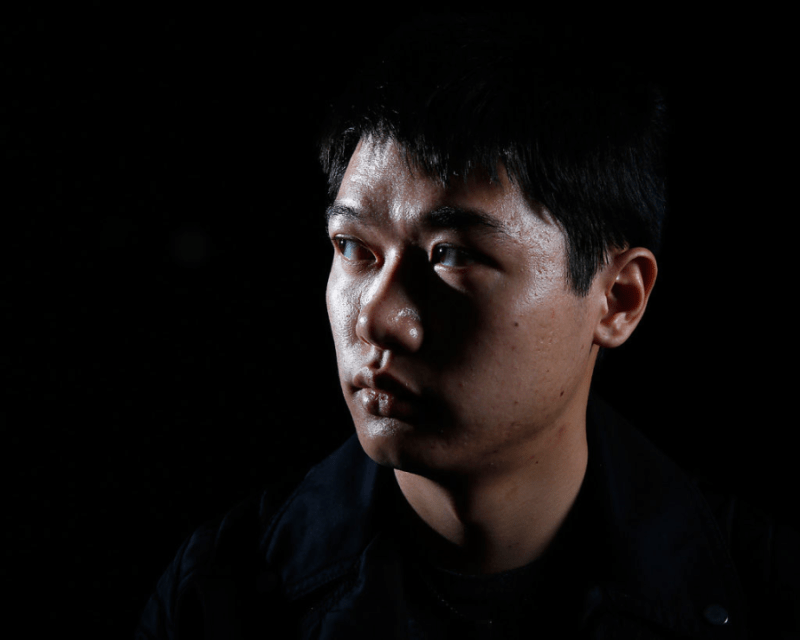
Russell Hsu, a Taiwanese MU student, pauses when sharing his feelings as an Asian student on campus on Nov. 25. Hsu said he hasn’t experienced a clear case of discrimination, but he has noticed more of an “invisible war.” Hsu said the majority of Americans are unintentionally less receptive of Asian culture, and it was hard for both groups to cross over racial barriers.
Media portrayal
Zack Morrison is president of the Asian American Association, the largest Asian student organization at MU. He said the media’s portrayal of Asians and the way Asian parents raise their children might explain why Asians’ concerns are under-reported.
“It ties back to representation in the media,” Morrison said. “We are always treated as the silent model minority. We always have to do good. We have to be the best at math, and we can’t be troublemakers.”
Morrison was adopted from China at age 2, so he’s been exposed to American culture his entire life. He said Americans seem especially intolerant of people from different countries with distinct accents.
“I have heard people complain all the time about how their calc (calculus) teacher or physics TA has an accent, and it is so difficult for them to understand them,” he said. “And, so they will say they hate that person.”
Several Asian international students who have experienced racial discrimination told the Missourian they decided not to report the incidents because they didn’t think it would lead to change.
Ken Han, who lived in a residence hall during his first year at MU in 2014, said he encountered frequent racial discrimination from white students. He said they often gathered in the lounge and used slurs while talking about him. They also banged on the door to his room and ran away once or twice a week.
“They just hated me just because I am Asian — maybe my appearance, accent, everything,” Han said.
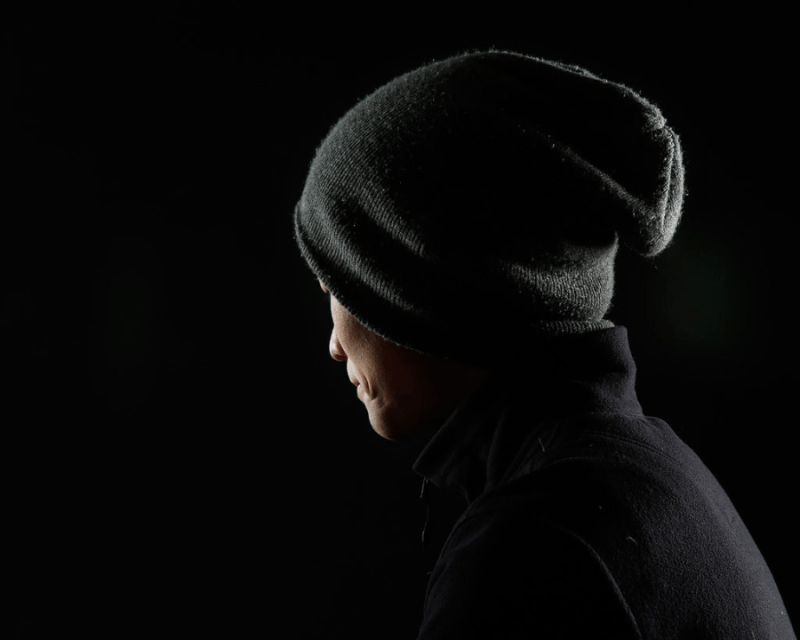
Ken Han, an Asian MU sophomore, said he experienced racism in his dorm when he was a freshman in 2014. He never reported his experience due to a fear of backlash and concern that nothing would be resolved. The Missourian photographed Han on Nov. 25.
Fear of backlash
Han never wanted to report the racism, though, because he feared backlash and thought it would make no difference. He also said he didn’t want the white students to get in trouble and hoped over time they would learn about his culture and stop bothering him.
“I kind of understand them because they are not accustomed to Asian students in their lifetime,” Han said. “I just want them to learn naturally because we are all students. We are in the process of learning something.”
Jiali Chen, president of the Association of Chinese Students and Scholars, said several Chinese students have said they suffered discrimination but didn’t want to report it for fear they could compromise their status as non-resident and international students.
Yizhe Sun, a fourth-year journalism student from China, said he understands why Asian students don’t like to air their complaints.
“We are here to study, not to cause a problem and attempt to make a change in this society,” he said.
Still, Sun believes MU should be aware of the problem and combat it.
Sun said he experienced racism only once, in 2012, but it was unforgettable. It was his first week at MU, and he ran into three female white students in a residence hall who called him “yellow” and “chink.”
“I feel very sad and embarrassed,” he said. “It made me feel as if white people really don’t like Chinese.”
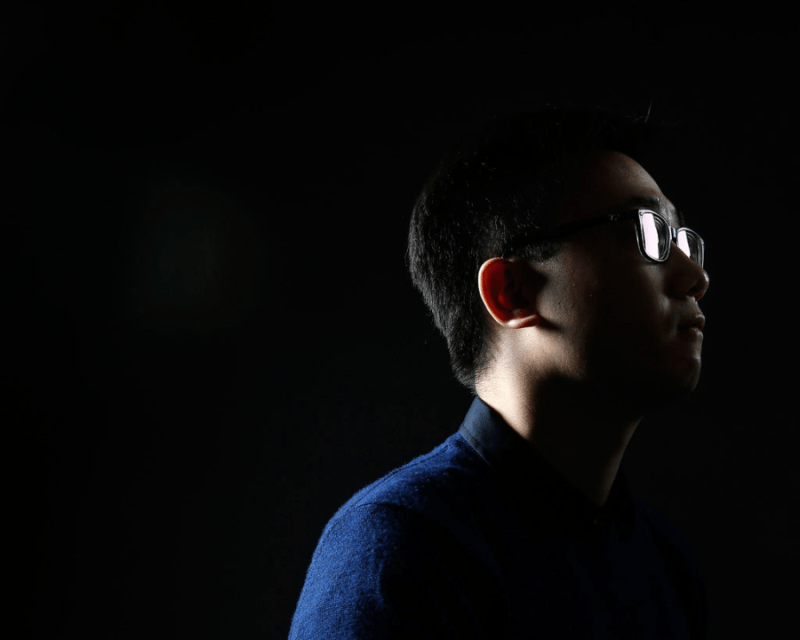
Yizhe Sun, a Chinese MU student, said he experienced racism during his first week at MU in 2012 when he was called racial slurs by white female students in a residence hall. Sun moved out of the residence hall two weeks after the incident but still attends MU. The Missourian photographed Sun on Dec. 7. The students were photographed in such a manner as to hide their faces, per their requests.
Not easy to fit in
Sun didn’t know the students’ names, but reported the discrimination to a hall coordinator. The coordinator told Sun that she would investigate and find out the students’ names, but Sun said that never happened.
Director of Residential Life Frankie Minor said the coordinator’s former supervisor reviewed her work files but found no document that matched Sun’s story. Minor also noted that under the federal privacy laws, MU is prohibited from disclosing personal information about students without their consent.
The coordinator no longer works at MU and was unavailable for contact. Sun moved out of the residence hall two weeks after the incident.
Minor said Residential Life staff encourage students to file bias incident reports, but staff members can also report discrimination themselves if they discover or experience it. He noted that the annual report from the Civil Rights and Title IX Office “reflects that Residential Life is one of the most diligent units reporting these types of unfortunate incidents.”
Vera Tan, who transferred to MU from Malaysia in 2013, said she was shocked when she arrived at MU by how segregated it was. Coming from Malaysia, where multiple languages, races and cultures comprise one society, diversity is nothing new to her. She soon realized, however, how difficult it was for her to fit into a predominantly white campus.

Vera Tan, who transferred to MU from Malaysia, said she experienced racism during her first semester at MU in 2013, where she was called a derogatory name after offering a differing opinion in a class. Coming from a diverse and welcoming community, Tan was shocked that she experienced such explicit discrimination. The Missourian photographed Tan on Dec. 7.
Training initiative
During Tan’s first semester at MU, a classmate told her that another white student had called her a “bitch” because she had offered a conflicting opinion in class. She perceived that as racist.
“Can you imagine, that I grew up in a place with so many races and this was the first time in my life that I experienced explicit racism?” Tan asked.
In October, when Loftin was still chancellor, he announced that MU would require diversity and inclusion training for all incoming students and faculty beginning this semester. That announcement came a day after a reported racial incident against African-American students at Traditions Plaza.
Cathy Scroggs, vice chancellor for student affairs, is responsible for student diversity education and said the training will include every marginalized group on campus.
Scroggs said finalizing the training curriculum normally takes a year to 18 months, so it’s unlikely to be perfect at first.
“It’s a journey,” she said. “We want to be sure incoming students understand the kind of environment we have and the type of inclusive campus we have. This training will set the stage so when they leave after the training, students will say, ‘Oh, OK. This is what I expected here at Mizzou.’”
Stephanie Shonekan, chair of the Black Studies Department, and Joan Hermsen, chair of the Women’s and Gender Studies Department, are crafting the curriculum.
Chuck Henson, the interim vice chancellor for inclusion, diversity and equity, was unavailable for comment.
Scroggs said the newly developed diversity training has been given to new students this semester.
Divergent views
Leaders of Asian student groups differed in their ideas for how to fight racism.
Prathamesh Bandekar, former president of the Cultural Association of India, said MU diversity officials should invite members of all student organizations to an open meeting at least once every semester. That, he said, would “help enhance the sense of belonging at MU.”
Bandekar said Asian students might not report discrimination because they are unsure of the repercussions and their rights, or because they don’t want to hurt their studies. Being unfamiliar with American culture and away from their families might make them ill-prepared to deal with the aftermath of a complaint.
Andrew Pham, external vice president of the Asian American Association, said he and members of other minority organizations agree that if MU wants students to be more active in reporting discrimination, offices such as the Civil Rights and Title IX Office must be more approachable.
“Right now, the only time we hear about the Title IX is through text, email or newspaper print,” Pham said. “You haven’t seen the face of anybody from Title IX, and we don’t know who operates in there and who works in there. And so, it makes (it) very hard (for students) to come to them with such a sensitive topic.”
Eardley, of the Civil Rights and Title IX Office, said four investigators in the office address every type of discrimination reported by all groups. She also plans to hire an education-and-prevention specialist who will work closely with the Chancellor’s Diversity Initiative, the student social justice centers and other campus groups to spread the word about changes in university policies for addressing discrimination.
If her office is to perform as expected, though, students, faculty and staff will have to be active in reporting their concerns.
“None of our work exists in vacuum,” Eardley said, adding that she’s cognizant of the fact that different folks might not trust people in authority or feel comfortable reporting discrimination.
“I am working to build trust with various communities,” she said.
The story earned the Region 7 Mark of Excellence Award in In-Depth Reporting by the Society of Professional Journalists in May 2017
Original link to the story can be found at https://www.columbiamissourian.com/news/higher_education/mu-s-asian-students-reluctant-to-report-episodes-of-discrimination/article_e384936e-963b-11e5-8813-c34632bd9101.html

 Journalism Blog By Sean Na