
LAFAYETTE, INDIANA —
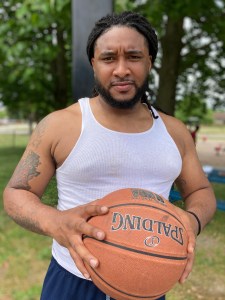
Seven years ago, while Keyonta Williamson was heading home after a visit to his friend’s house in suburb Chicago, a group of white patrol officers stopped him. Williamson, then 18-year-old wearing a white tank top and camouflage shorts with reggae hair, wasn’t briefed why he was stopped. Soon, he was pushed on the ground and got his neck knelt on by police. He, fortunately, survived despite a physical search.
“To me, I couldn’t believe that they did it,” said Williamson, now 25 working at Wabash National as truck maker in Lafayette, Indiana. “It’s like you know why (they did it) but you don’t know why.”
He was laughing while recollecting a memory of him being racially profiled. But, he could’ve been killed at an age too young to be stopped, he said.
Racial profiling has troubled, divided, and plagued the nation featured by the promising phrase — “American Dream.” Government reports and studies have validated that racial profiling causes distrust in police; brings detrimental health effect to those who get profiled; and could induce negative ripple effects on individual’s job and further local economy.
U.S. Congress made numerous attempts to bring legislative measures to lessen the extent of racial profiling in America, starting by introducing the Traffic Stops Statistics Study Act in 1997. And since 2001, the End Racial Profiling Act‘s been filed to become a law every year; but has always stopped at introduction.
Black Lives Matter movement, founded a year following the fatal shooting of 17-year-old Trayvon Martin in Florida in 2012, was in part a response to stimulate legislative changes to fight racial profiling, according to its official website. However, the death of George Floyd in Minneapolis and a subsequence of some violent, but mostly peaceful protests nationwide against police brutality on Black highlight a conundrum on finding a solution to end racial profiling.
Since June, at least 15 million Americans of all races have stepped out to rally against police brutality on Black from more than two fifth of U.S. counties, according to a New York Times analysis. In response, legislative measures such as defunding police, diversifying police forces, and establishing more constructive trainings for police have been introduced through 20 U.S. bills and resolutions citing the name George Floyd.
However, legislative actions have long faced a roadblock in combating racial profiling: implicit racial bias. Studies have shown implicit racial bias is a major contributor to rising racial profiling cases in America. A social stereotype that Blacks are dangerous has led people get faster to shoot armed Blacks than armed whites, according to computer simulation studies by the University of Colorado. Plus, a 2014 study by Stanford University says unarmed, innocuous Blacks more likely become the targets of visual surveillance by police officers and the public than whites, due to a deeply rooted perception that Black faces look more like criminal than those of white.
While the name George Floyd, calls for actions against police brutality, systematic racism, and numerous others related to justice for Black lives are flowing around in both political and social debates, Reporter Sean Na have met with three, ordinary Black men, including Williamson, and asked them to share what they believe could be done to help alleviating the extent of racial profiling in America.
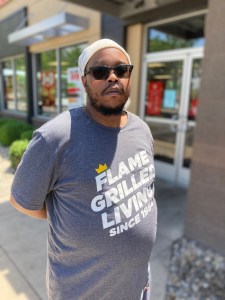
“People get scared of what they don’t understand (of Black culture),” said TyJuan Johnson, a five-year military police veteran who now grills beef patties at a local Burger King in Lafayette.
“I can walk down the streets, bro,” Johnson said. “When I ain’t got my work clothes on and people see me, get my head turned my jewelry on, they get nervous across from the streets. And I am just walking my dog.”
He wrote a letter to local representatives several times regarding racial profiling that he and his friends had gone through. The response he received each time was disappointing.
“It was political. (The response was like) — ‘Yeah, we heard you. But, yeah we will get to it,'” and no action afterward, he said.
Set aside politics, the first step on a quest to end racial profiling is to get people to be more understanding of a different culture, a Black culture, he said.
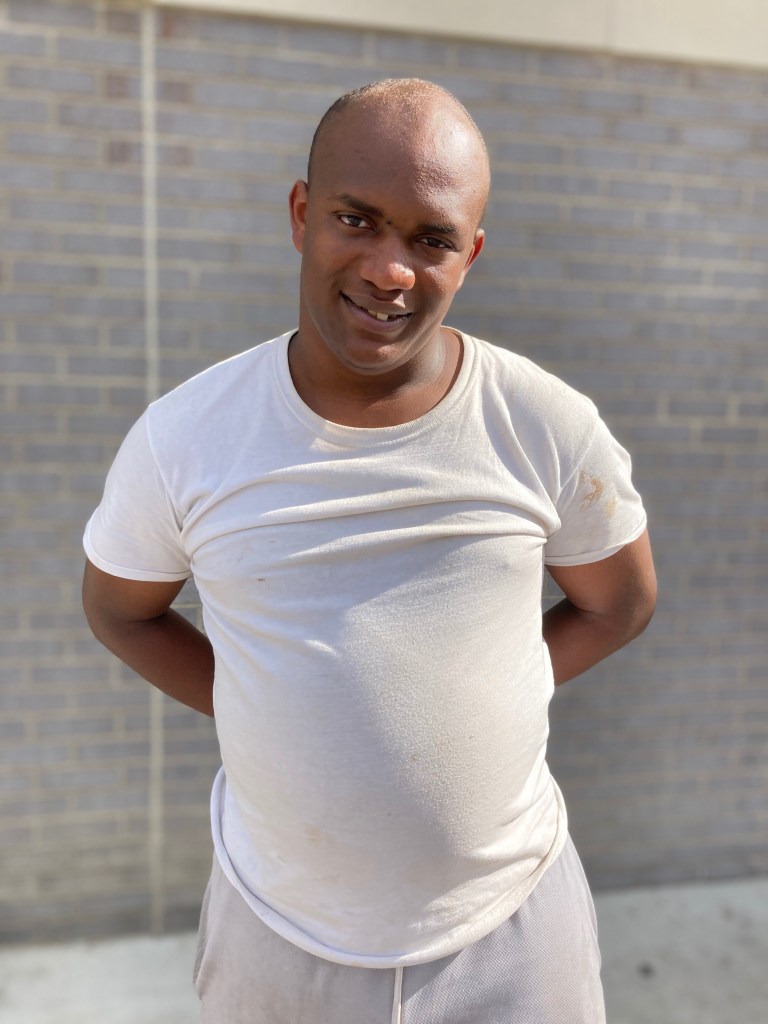
About five months ago, Arion Walton, a 23-year-old homeless gospel musician, walked into an apartment leasing office, which had told him over the phone a day before that it would give him 30 percent discount on a monthly rent because of his disability. As soon as a female leasing agent saw him walking in, she told him every room had already been rented out. Disappointed, Walton turned around and was about to exit the office. While exiting, he heard the agent saying — “I don’t give a rent to Black.”
Born and raised in the only predominantly Black city in Indiana, Gary, he however didn’t solely attribute the cause of racial profiling to white, but Black as well.
“Even people of my color of skin are becoming more racist than what I can imagine myself,” he said.
He didn’t believe Black Americans continuously crying foul over racial profiling would cut the root of racism, unless they change.
“But for us (Black) as people, we cannot allow ourselves to make everything a racial slur no matter who we are and what we have gone through,” he said.
Williamson was baffled when asked to share a way he thinks could end racial profiling. He said he couldn’t come up with any as it’s rooted too deeply in the society.
Then, as he was walking back to the basketball court, he left a message that could heal the racial wounds if all Americans could think like him.
“Your color doesn’t matter to me. I love your heart. I love who you are as a person,” he said.

 Journalism Blog By Sean Na