
SOUTH KOREA —
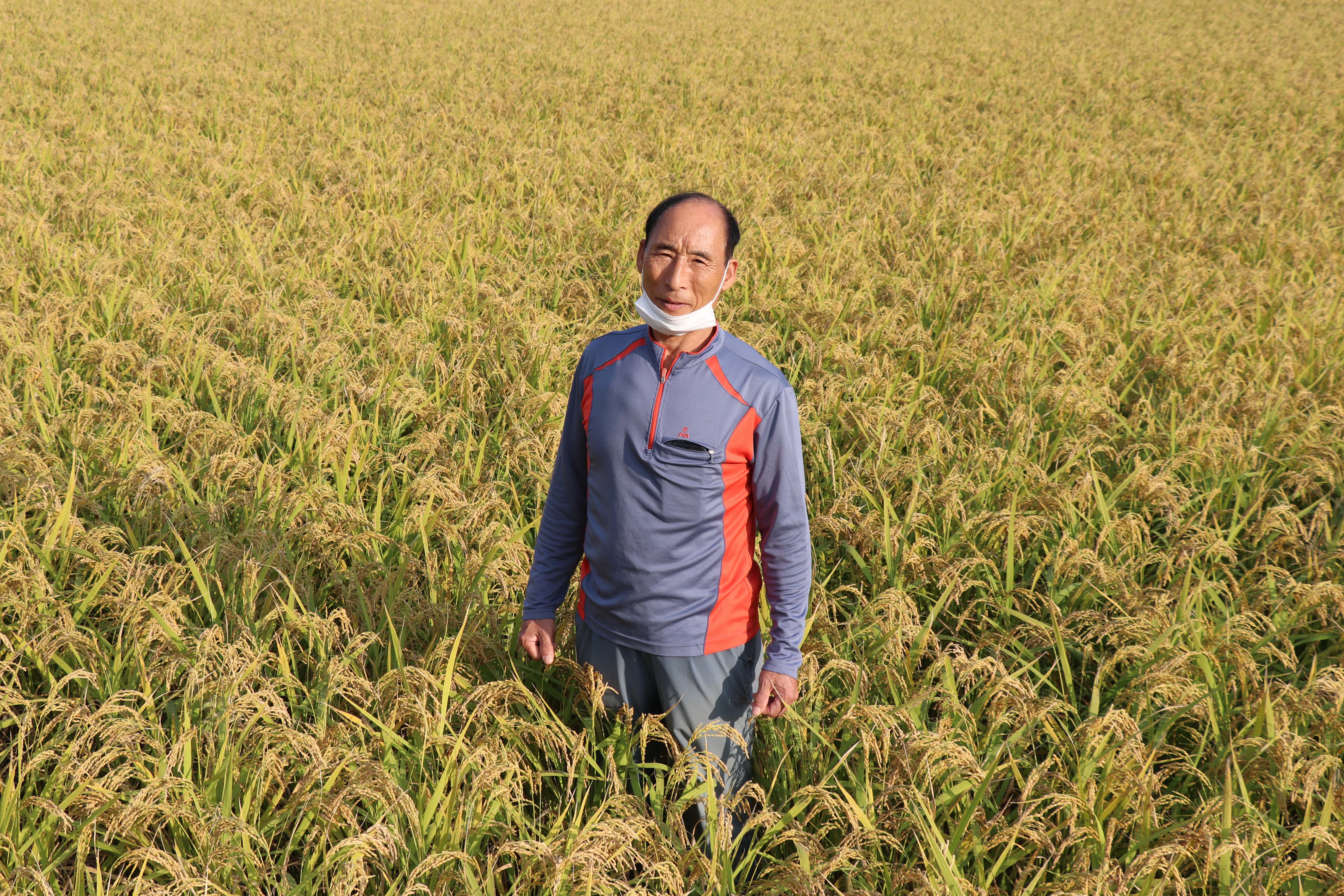
Plodding through the rugged paddy fields to hand-pick weeds off a sea of golden rice plants a few weeks before the harvest, a lifelong rice grower says this is a work he hearts, the work that he feels obliged to do not to become rich, but to serve school kiddos.
An Taewan was among the tens of thousands of farmers switching to organic productions in late 2000s. Fascinated by an idea that organic agriculture saves earth and provides safer meals to kids, he didn’t mind jumping into a market that would have undergone a subsequent downfall: plummeted organic farmer population, shrunk organic market size, and prevailing low demand for organic products.
The 40-year veteran rice grower powered through a difficult time. However, once the corona pandemic landed in South Korea, he was tempted to quit his lifelong work.
An is contracted to sell a majority of his organic rice to public schools. He harvests about 48 tons of rice every year; and roughly 28 tons of them were sold to schools in 2019. But once COVID-19 infection cases started to ramp up in late February, schools couldn’t welcome back students in March; kept their doors shut for safety concerns until May; and paused school lunch operation without a scheduled resume date. As a result, the lion’s share of An’s rice harvested in 2019 wasn’t sold.
“Looking at mountains of rice stacked in the storage worried me a ton,” he says.
More than 22,000 organic farmers including An, or about 40 percent of the current organic farmer population, are government-contracted to sell a majority of their crops to schools. A rising fear of losing their largest and most faithful buyer pushed most of contracted farmers to the edge of leaving organic agriculture.
Then, a windfall came.
Government workers visited An in early June and said they would purchase all of his rice stuck in the storage in the next three months.
“I was ecstatic, speechless,” says An, recollecting the moment of the visit.
The organic bundle program is what’s prevented a possible 40 percent loss of already largely diminished organic farmer population and ultimately resuscitated the faltering organic agriculture.
It utilized a neglected portion of public budget originally set for school lunch to purchase organic rice and produces, bundled them up, and sent the bundles to parents who at the time had to look after their kids 24/7 due to schools switching to E-learning, between one to four times varying by localities, from May to August.
Faltering organic agriculture
With the help of nationwide efforts to foster organic agriculture, from 2001 to 2009, a number of organic farms increased from 4,678 to nearly 200,000. However, once thriving organic agriculture soon faced a subsequent downfall peppered by the pandemic.
As a government mandate that bars any use of pesticide in organic farming was announced in 2010 and officialized six years later, appalled by stringent organic farming rules and an increased production cost, nearly 75 percent of organic farmers forfeited organic agriculture to sustain their farm business, according to a government report. Consequentially, the total market share of organic products was slashed by more than a half from 2012 to 2018, while a low demand for premium grains and produces persisted, a 2019 report by the Korea Rural Economic Institute says.
Organic agricultural products are price-tagged at an average of about 10 to 15 percent higher than those of non-organic, according to an internal report by the Korean Ministry of Agriculture, Food and Rural Affairs. For instance, an organic cabbage grower brings about 14.9 percent more annual profit than that of non-organic cabbage, the report says. But, that’s only if every organic cabbage gets sold at a premium price, which isn’t always the case.
While no data has been reported to illustrate approximate amounts of organic products sold at a non-organic price, anecdotally speaking, about 20 to 30 percent of organically grown rice and produces tend to be sold at a price lower than their original price tags every year, Hong Geumyong, of the agriculture ministry, who oversees organic farmers in South Korea, says of the report.
Hong’s estimate transpires to be An’s story before he was contracted to schools.
After having switched to organic agriculture in 2008, because of an increased cost for growing organic rice in compliance to the new rules and a persistently low demand for organic rice from consumers, he had to sell a sizable portion of his crops to markets at the non-organic price, bringing him a less profit margin than what he used to bring before 2008, he says.
“Most of organic growers in South Korea would probably share my situation,” An says.
On top of a higher price, more vulnerable to insects, organic grains and vegetables look less fresh and green than those of non-organic, making them even more unpopular to consumers, says Park Leesik, another lifelong organic farmer.
“Before 2019, many of farmers (whom I represent) sent portions of their crops to a few organic market franchises,” Park, 69, who represents over 5,700 organic farms in Gyeongsang South Province, says. “The rest then were sent to general markets at a price equivalent to that of non-organic.”
To sustain organic agriculture and help farmers reap reasonable profits, since 2010s, South Korea has gradually increased the use of organic ingredients in public school lunch. More than 68 percent of the 15 most frequently used ingredients for school lunch, such as rice, onions and potatoes, were organic in 2017, according to another internal report by the agriculture ministry. And in 2019, with an extra budget assigned to buy organic products at their original price tags, the country decided to make public school lunch be free for all by allocating 3,150 billion won (about $2.6 billion) annual budget into lunch operation.
But, once the corona pandemic shut down the entire school lunch operation from March to May, more than 22,000 farmers contracted to schools didn’t get a majority of their crops sold.
“We all wanted to just die,” Park, who suffered a 75 percent profit decrease from March to May, says of his mental status during the school closure.
Meanwhile, as a result of the shutdown, three months’ worth of the lunch budget remained untouched in the government’s strongbox.
Expedited birth of capital program
To prevent another big loss of organic farmer population, the ministry wanted to use the lingering lunch budget to save the faltering Korean organic agriculture.
The 375 billion won ($332 million) organic bundle program, which’s delivered about $30 to $50 worth of an organic bundle consisted of a bag of rice and assorted produces to more than 5.3 million of students’ families, was birthed after less than a month of preparation from the scratch.
The nascent of the program began with a grassroot movement in early March flared by municipal offices. Having acknowledged difficulties organic farmers were confronting due to school closure, civil servants from almost every locality volunteered to donate their fringe benefits or spend personal monies to purchase organic products; coaxed adjacent businesses and military bases to make a bulk purchase from farmers; and promoted sales of organic products through regional online malls to encourage purchases from ordinary consumers.
Inspired by the grassroot movement, in April, the agriculture ministry devised the bundle program, hoping to run it as quick as possible by spending the lingering lunch budget.
One united goal — save organic agriculture — enabled the ministry, along with its fellow branches, to shorten the design and implementation phases from a year to a month and implement the program in May.
“The negotiation process wasn’t easy as various interests clashed among different branches of the government,” says Kim Cheol, of the ministry. “However, because we all shared the same goal, the whole process wan handled smoothly than expected.”
Resuscitated organic agriculture
The program’s been paused since September due to a money problem. But it ended when schools were gradually reopening. As of mid-November, 99.5 percent of public schools in South Korea have resumed in-person classes, and about 80 percent of students now sit in classroom every morning, the Ministry of Education confirms.
Schools could close again due to an unpredictable nature of the pandemic. However, South Korea is prepared to face it. About half of municipalities in the country have enacted a law that mandates any unspent school lunch budget due to future school closure be used for resuming the bundle program; and the other half are considering adopting the same law, Hong Geumyong, who worked with Kim to run the program, says.
Moreover, it raised public interests in buying organic products, helping a regional online mall to increase its organic products’ sales by more than sevenfold compared to those of last year, according to a local newspaper’s report. Plus, major retail markets have shown interests in putting more organic products on their shelves, both off- and online, Hong says.
“The bundle program prevented a possible 40 percent loss of the whole organic farmers population, which, if had happened, could have jeopardized the sustainability of Korean organic agriculture,” Hong says.
Program’s impact and limitation
When Park first learned of the bundle program, he felt “as if my late parents came back to life.” It has indeed imbued him and his fellow farmers with an “iron will” of continuing in organic business, he says.
The program also helped a worried mother raising sick kids and infused hopes of livings to thousands of low-income parents struggling to find seasonal jobs in suburban areas.
Kim Jaeok, a full-time working mom, raises two sons, 15 and 6, both of who need to watch out what they eat because of their allergic skin diseases.
“Earlier in the pandemic, I was worried about how my kids suffering atopy would eat,” Kim says. “I was reluctant to going to a market fearing contracting the virus. Then this bundle came by surprise. Thanks to that, I was able to fix safer meals for my kids at home.”
Furthermore, the program created over 10,000 seasonal packaging jobs mostly in suburban areas. Most of those employed were low-income parents who’d stream into local daily labor markets every dawn to earn a small wage to survive each day, Kim Hyungsuk, packaging work supervisor, says.
“Since the coronavirus, a number of jobs available at labor markets have decreased exponentially,” Kim says. “Thanks to the program, these parents were able to earn enough money to get through a rough time this summer.”
The bundle program, however, wasn’t a cure for all.
Lee Hyungsoo, who’s been growing organic produces for 12 years, was among tens of thousands of farmers who had lost over 70 percent of their annual sales from March to May, before the program started.
Sales from March to May makes up about 70 percent of his annual income. To him and many of his fellow produces growers, the government’s assist came too late.
Even after the program, because one bundle could take up to nine kinds of produces from about 70 different types, produces growers could only reap about one third of the pandemic-led damage recovery than rice growers had.
“The bundle program helped me a little, financially,” Lee says. “But I am still really worried about the coronavirus.”
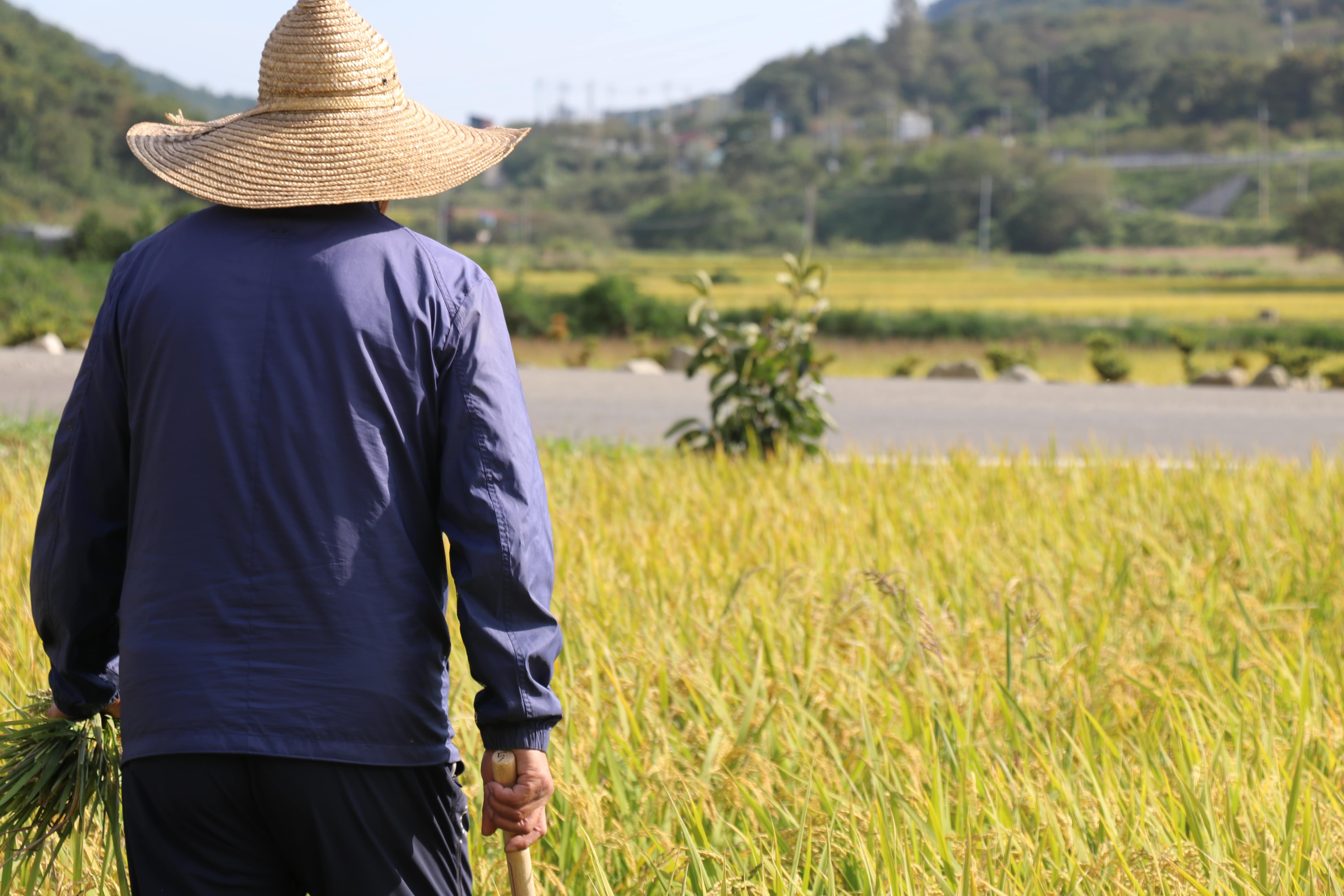
Soon, An would start harvesting organic rice for 2020. Unsure whether he’d be able to sell all of it, nevertheless, he still drives a moped to the field every morning.
“Coronavirus still concerns me a lot,” An says. “But, imagining school kids enjoying my rice is what motivates me during this difficult time.“

 Journalism Blog By Sean Na